Latest news from MK Consulting
10 / 2026
One week in Dubai. And an insight you won't find in any report.
After the summer break, I spent another week in Dubai in October; my last visit was in June. This rhythm is no coincidence. In the Gulf region, business only happens with presence. Relationships are built in personal conversations here, and they grow with every meeting.
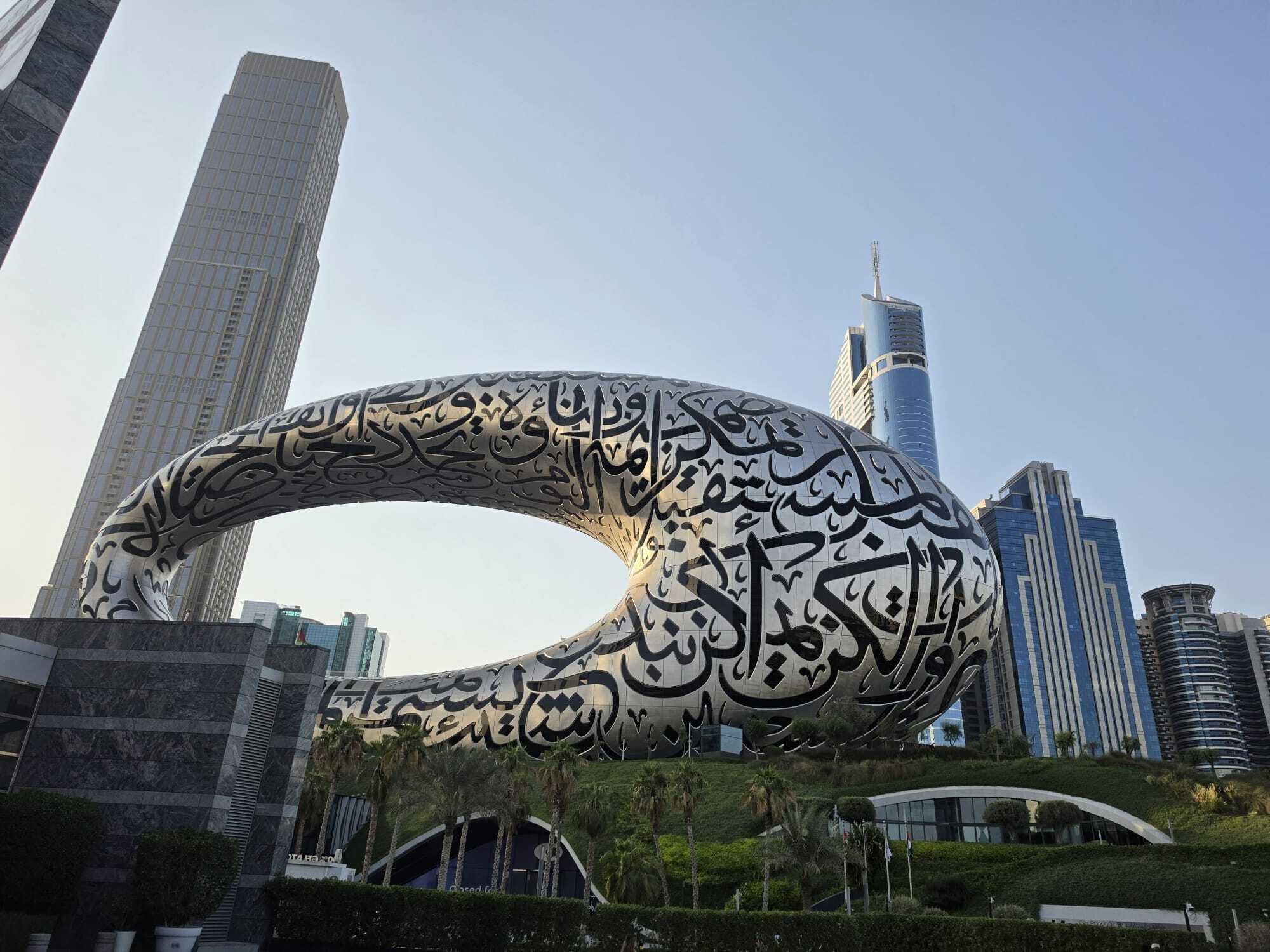
It was a week of a great many conversations, across many sectors and with very different counterparts. Among them were two topics that are particularly close to my heart: alternative financing methods and senior living on an international level. And there were tangible results: networking conversations on the ground led to new targets in the German pension business, as well as interesting investment targets in areas such as battery storage and data centres. A German pension topic, initiated in Dubai: this, too, shows how this location works as a hub.
What remains is a picture of how a location thinks when it plans in decades.
First, the obvious: the level of construction is impressive. Walk through the DIFC, the Dubai International Financial Centre, alone, and you see cranes, excavation pits and new towers at a density we hardly know in Europe anymore. Come back a few months later and you see how fast things are moving.
This week, a news item came out that fits this impression exactly. The UAE Ministry of Investment stated that, despite the war in the region, not a single planned foreign direct investment was cancelled in 2026. According to UNCTAD, around 48 billion US dollars in foreign direct investment flowed into the Emirates in 2025. That is a record and the top position in the Middle East. The target is 65 billion US dollars per year by 2031, and according to the ministry, the country is on track.
Strategies that are being delivered
Behind these figures are clear long-term strategies. At the UAE level, this is the National Investment Strategy 2031; for Dubai, it is the Dubai 2040 Urban Master Plan, which sets out urban development for almost two decades. We know papers like these in Europe, too. The difference: in Dubai, they are not declarations of intent that disappear into a drawer. The points are being worked through step by step, and you can watch it happen.
Boots on the Ground
That is exactly why this principle matters so much. You can read figures at your desk and tick them off. On the ground, they take on a different quality. If we want to assess markets, partners or investments, we have to go there. Presentations and market reports provide data. What is really happening, we only see authentically on the ground: on the construction site, over coffee, in the stands.
That also means not explaining away the problems. Tourism is feeling the geopolitical situation; that is obvious, and nobody is sugar-coating it. What is remarkable, though, is how it is being handled. There is a clear strategy for getting through this phase and for where to stand afterwards. No panic, no change of course after every headline. That is the difference between quarterly thinking and long-term thinking.
A football match and a burger
One highlight that stays with me is the U17 academy match between Al Wasl and Emirates Club. Anyone who comes from club football automatically looks at structures at such an event: infrastructure, organisation, the importance the club places on its youth. The impression: here, there is a deliberate investment in the next generation. Youth football is where you see most honestly whether a location thinks long term.
And because a good week also includes good food: the smash burger at Take the Good Food was sensational. A clear recommendation for anyone travelling to Dubai.
Three learnings from this week
1. Dubai is a hub for platform business, in every direction.
The Emirates have long since become a hub. From here, business is set up towards India, Africa and the growing markets of Asia. If we as European companies are looking for access to these markets, we find capital, infrastructure and a network in Dubai that connects exactly these regions.
2. Sport is the ideal networking platform.
Hardly any other environment opens doors as naturally as sport. In the stands, at an academy match, at an event, conversations happen that would never take place in a meeting room. We know this just as well in Vienna. In Dubai, however, sport is deliberately used as a strategic instrument: for the location, for investment, for relationships.
3. Dubai has a clear plan: long-term construction and investment.
The cranes in the DIFC are not a flash in the pan. They follow a plan designed over many years that is not abandoned even in difficult phases. Capital follows reliability. Investors stay because they know where they stand.
What does this mean for us in Europe?
Too often, our decisions are driven by the next season, the next budget or the next headline. That is understandable, but it costs room for manoeuvre. Dubai shows what is possible when you take a ten- or twenty-year plan seriously and see it through even when the environment becomes turbulent.
We do not have to copy it. The conditions are different, and geopolitical risk belongs in every due diligence today, on both sides of the table. But the mindset deserves a close look: think long term, invest consistently, work on networks.
For me personally, the conclusion is clear. During my time in club football and in consulting, I have often seen how much short-term thinking costs. Every visit to Dubai shows me the counter-model. That is why I continue to build the bridge between Austria, the DACH region and the Gulf region: in sport, in financing, in pensions, in investments and in senior living. I will continue the conversations from this week.
Thank you to everyone who took the time, opened doors and spoke openly, especially Yousuf Behzad, Dr. Juma Al Matrooshi, Sebastian Uckermann and Marcus Schmidt.
If you work with partners in the Gulf region yourself or are considering it: what are your experiences? I look forward to the exchange.